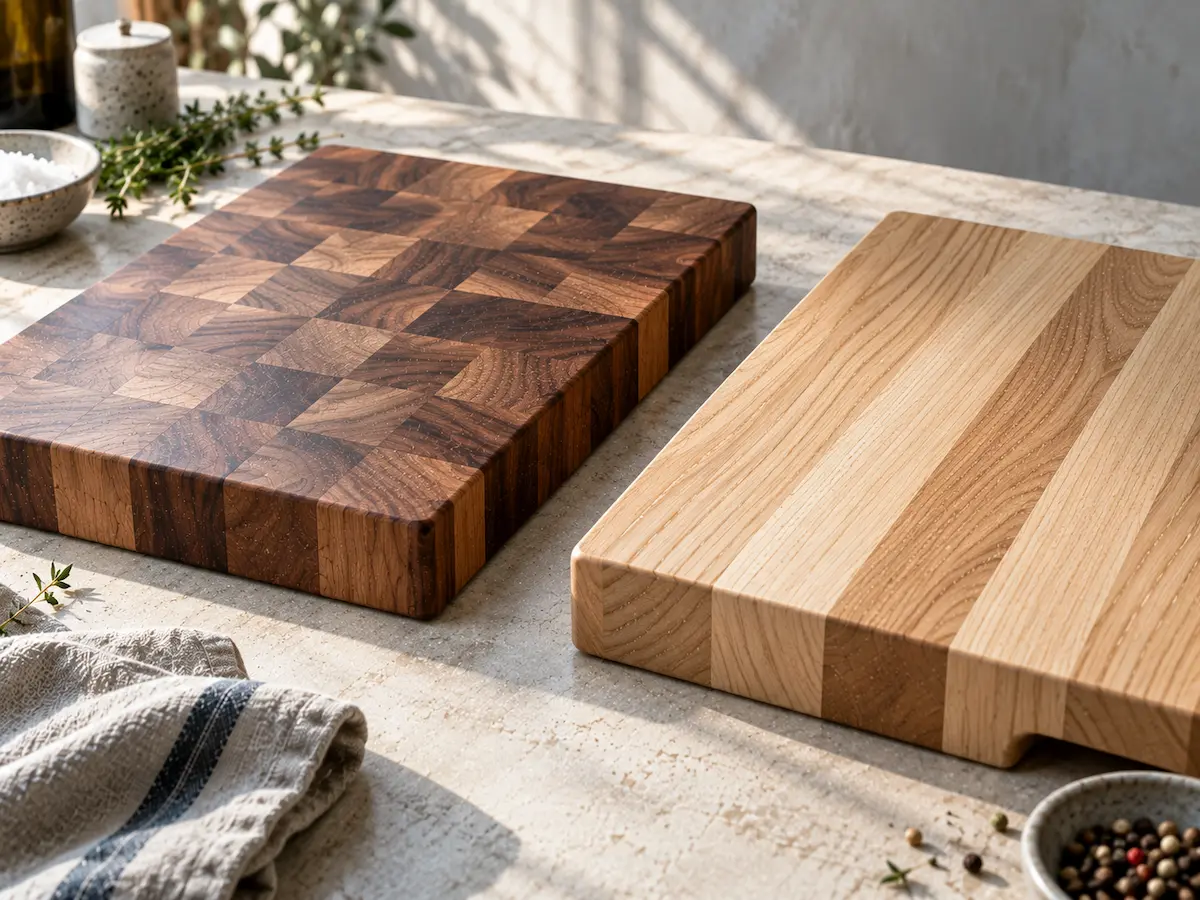
A wooden board needs very little, but it does need the same few things consistently: wash it quickly, dry it properly and keep it oiled. Do those and it will outlast a plastic board many times over.
Cleaning after use
Wipe or wash the board with a cloth, warm water and a little mild washing-up liquid as soon as you have finished. Rinse and dry it with a cloth. Do not leave it to soak, and never put it in the dishwasher: heat and prolonged water exposure are the most common reasons boards crack or warp.
Drying
Dry both faces. Stand the board on its edge, or on a rack, so that air can reach both sides at once. If one side dries faster than the other the board bends towards the drier face. Keep it away from radiators, ovens and direct sunlight.
Oiling
Oil replaces the moisture and natural oils that wash out of the timber and slows the absorption of liquids. Use food-safe mineral oil or a board conditioner of mineral oil and wax. Avoid cooking oils such as olive and sunflower, which can turn rancid and leave a sticky, unpleasant surface.
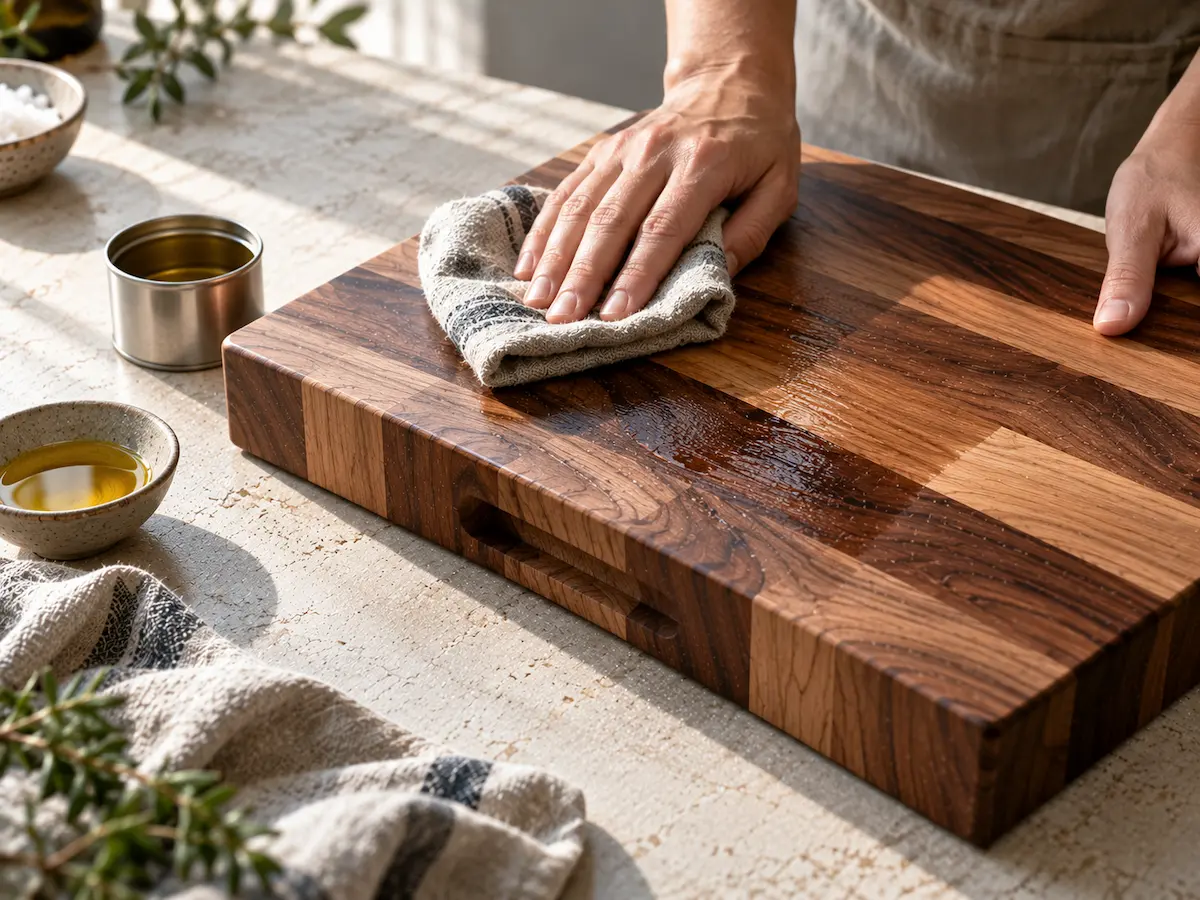
To oil a board: make sure it is clean and completely dry, pour a little oil onto the surface, spread it along the grain with a lint-free cloth, cover the edges and sides, and leave it for several hours or overnight. Wipe off any excess the next day.
A simple test is to flick a few drops of water onto the board. If they bead, the surface is protected. If they soak in, it is time to oil. New boards and end-grain boards will need oiling more often, perhaps monthly at first.
Stains and smells
Sprinkle coarse salt over the board and scrub with half a lemon, then rinse, dry and re-oil. For stubborn marks, a very light sanding with fine paper will refresh the surface; oil afterwards.
Garlic and onion odours generally fade with this treatment. A board will also lose odour naturally if it is dried properly between uses.
Warping and cracks
Warping is almost always about moisture. Prevent it by drying the board evenly, not soaking it, and oiling both faces. If a board has started to cup, resting it with the hollow side up on a damp cloth overnight can sometimes help; it will not fix a severe warp.
Fine surface cracks in a dry board can usually be improved by oiling. Large cracks or splits through the glue lines should be looked at. Stop using a board that has split in a way that traps food.
Food hygiene
Use a separate board for raw meat and fish and a different one for ready-to-eat food, and wash them promptly in hot, soapy water. Wash your hands and knives when moving between raw and cooked food. A well-kept timber board that is cleaned and dried properly is a perfectly good surface for food preparation.