Wooden cutting boards look similar from a distance, but how they are made affects how they perform and how much care they need. The two most common constructions are end-grain and edge-grain.
How each board is built
Timber is made of long fibres that run along the length of the tree. When you cut a board you can present those fibres to the knife in different ways.
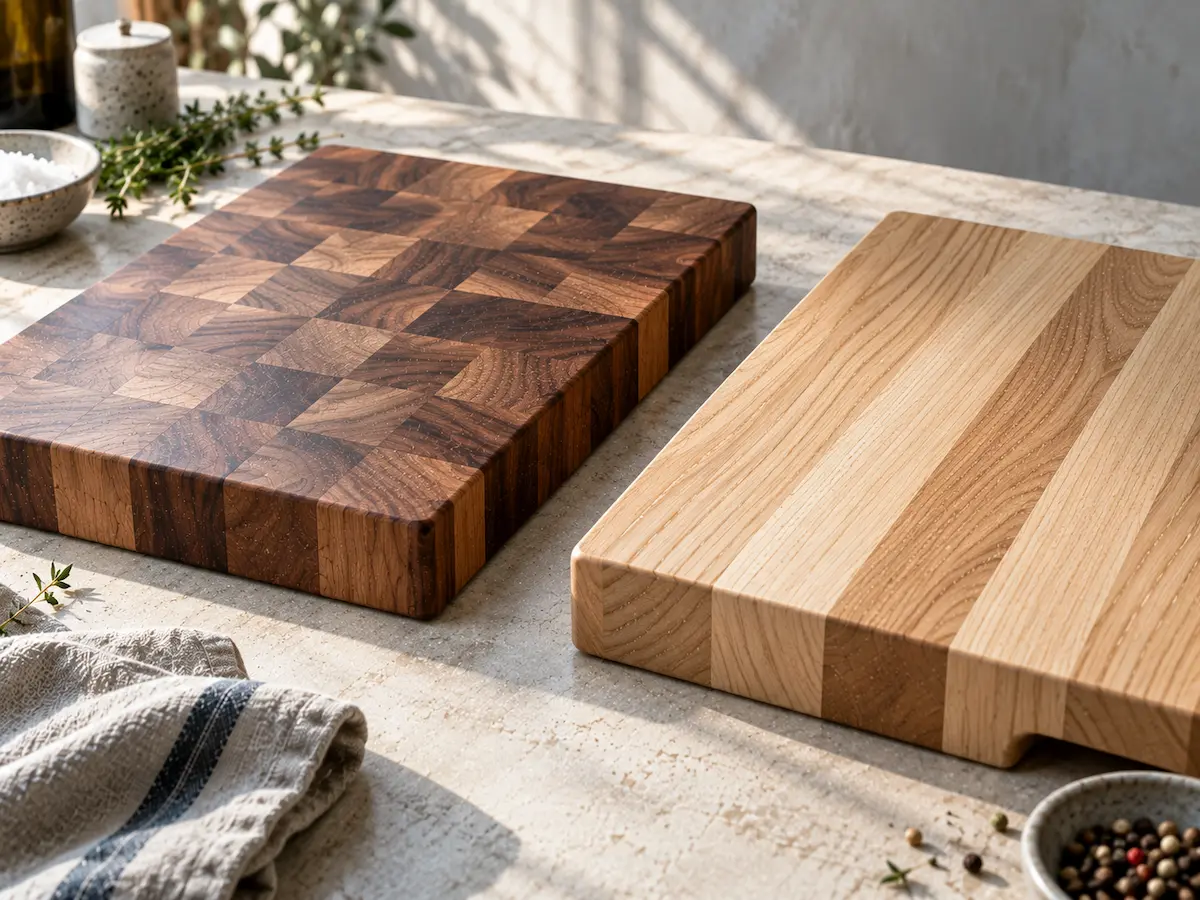
An edge-grain board is made by gluing long strips of timber together side by side. The strips are turned on their narrow edge, so the surface you cut on is the long edge of each strip. The fibres run along the length of the board.
An end-grain board is made by gluing strips together, cutting that block across the grain into sections, then turning those sections on their ends and gluing them again. The surface you cut on is the cut end of the fibres, typically in a checkerboard or brick pattern.
What happens under the knife
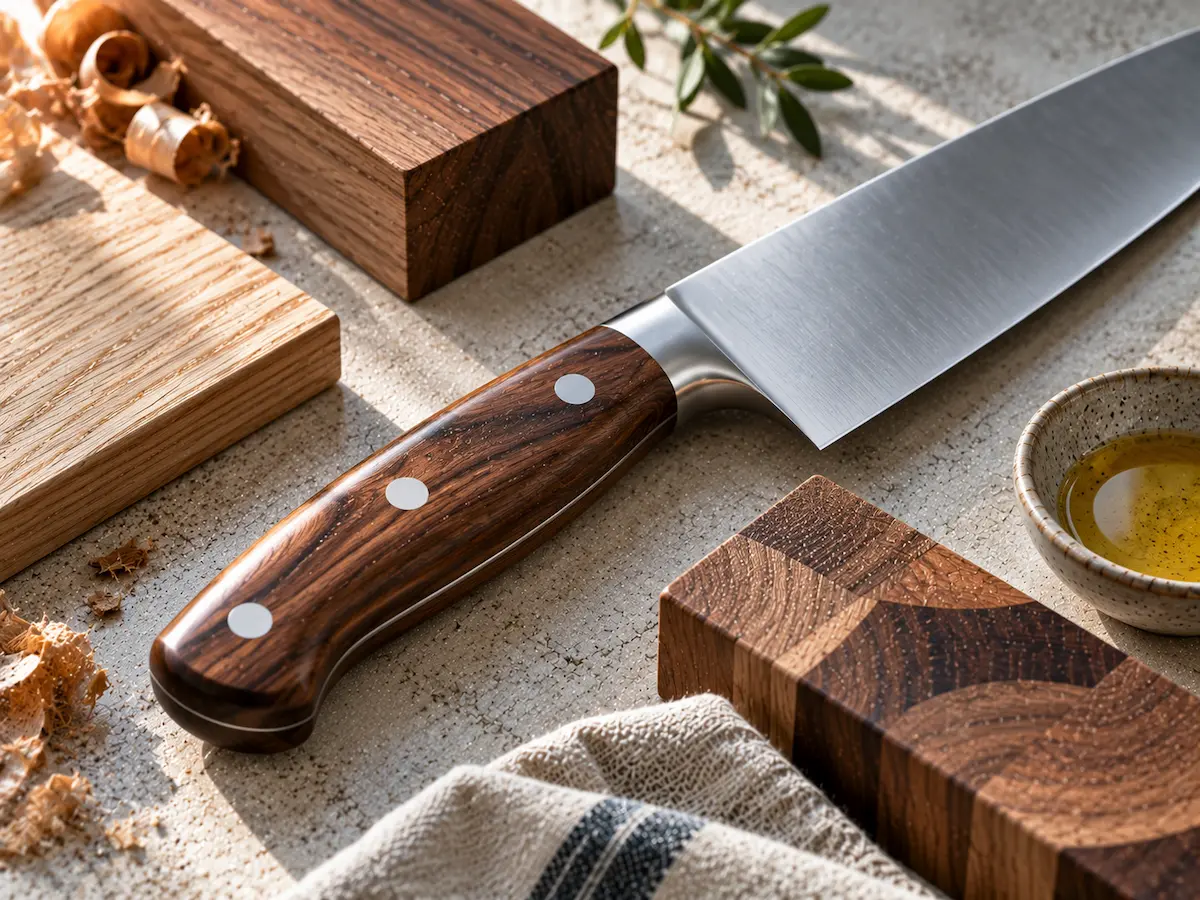
When a knife edge meets an edge-grain board it cuts across the fibres. On an end-grain board the edge goes between the fibres, which then close up behind it. Many cooks find end-grain boards feel softer under the knife and are kinder to a fine edge, and that surface marks are less obvious as a result.
The difference is not dramatic for occasional cooking, but for someone who uses a good knife every day, it is noticeable.
Stability and movement
Timber expands and contracts as it takes up and loses moisture, mostly across the grain. An edge-grain board is generally more stable and less prone to splitting, and it is easier to make flat.
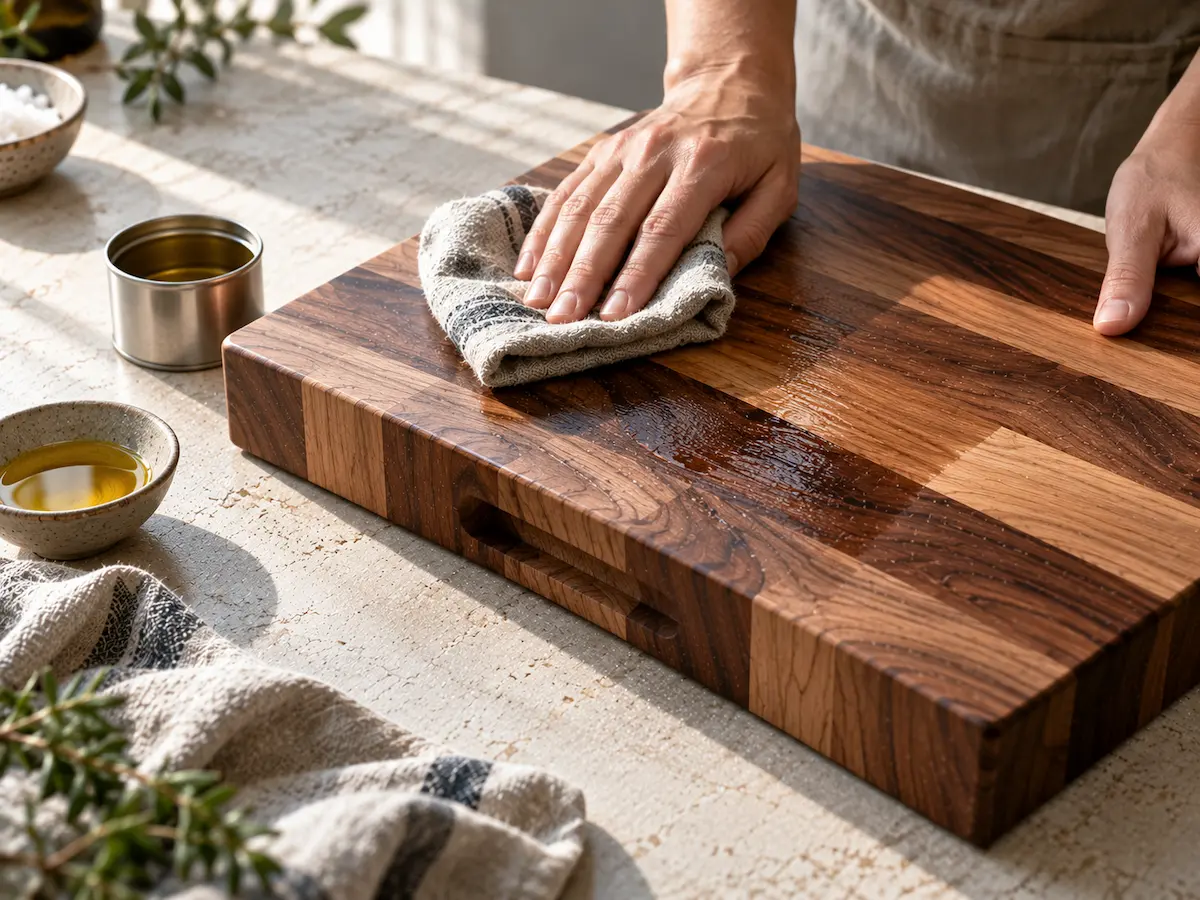
An end-grain board has many small blocks, each moving slightly, and the glue lines run in several directions. With good construction and proper care this is not a problem, but it does mean that an end-grain board is less tolerant of neglect. It will need to be oiled regularly and should never be soaked.
Weight, thickness and price
End-grain boards are usually thicker and heavier. That mass keeps them still on the worktop but makes them harder to move to the sink. They also take more timber and more time to make, so they cost more.
Edge-grain boards are lighter, thinner and generally more affordable. For a large board that will be carried regularly, they are often the better choice.
Which timber
Walnut is dark, fine-textured and forgiving of marks. Maple is pale, hard and tight-grained. Oak is hard-wearing with a more open grain, and ash is pale and light. All can be made into good boards in either construction.
Which should you choose
If you cook a lot, care about your knives and are happy to oil a board regularly, an end-grain board is a lovely thing to own. If you want something lighter, stable and easier to look after, choose edge-grain. A small end-grain board is a good way to try the construction before committing to a large one.
- Choose end-grain if you want the gentlest surface for your knives and do not mind the weight.
- Choose edge-grain if you want a lighter, stable board at a lower price.
- Keep a separate board for raw meat and fish whichever you choose.