Two knives can look alike and feel entirely different. A lot of the difference comes down to what they are made from and how they are finished. The same is true of boards.
Steel
Steel for knives is a balance of hardness, toughness and corrosion resistance. Harder steel holds a fine edge for longer but is more brittle; softer steel is more forgiving but needs sharpening more often. Alloying elements change the balance. Chromium makes steel stainless; vanadium improves wear resistance.
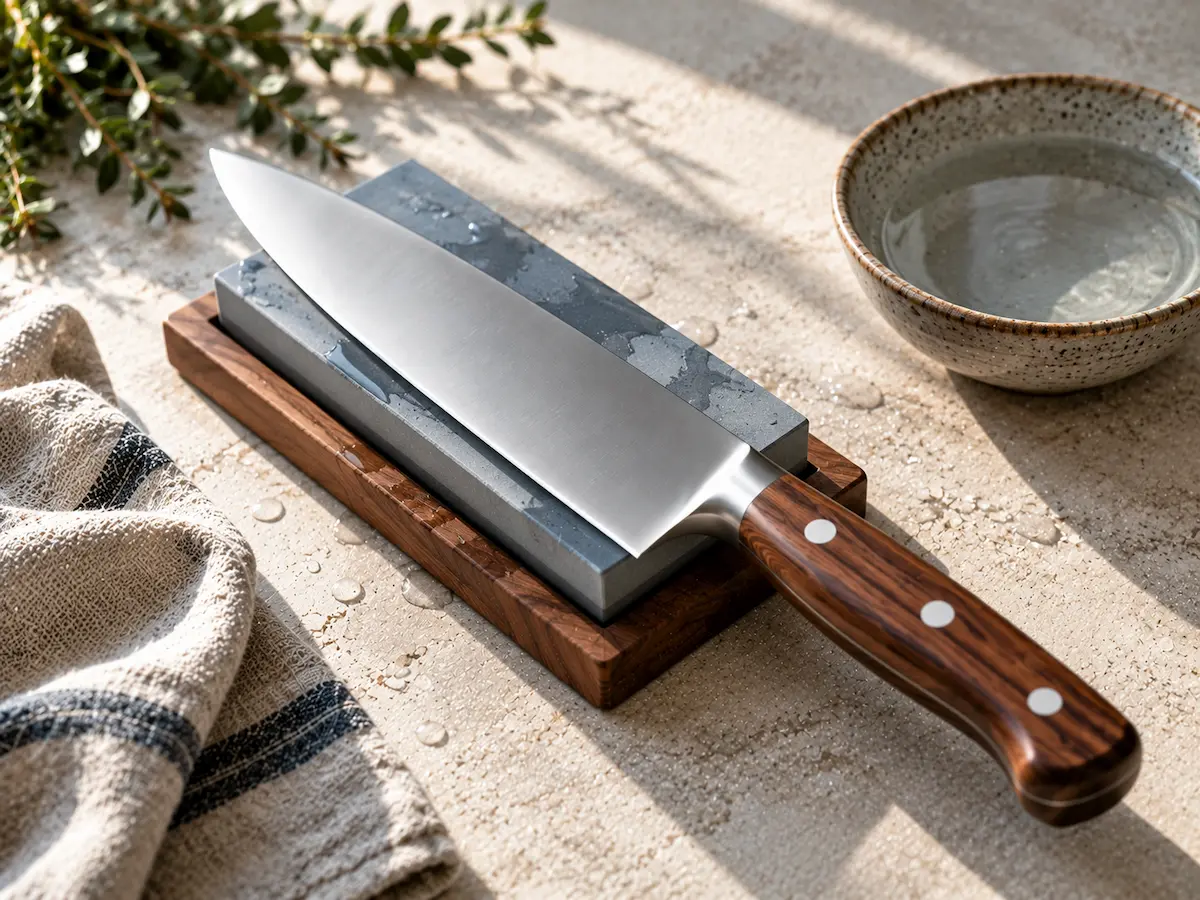
AEB-L and 14C28N are fine-grained stainless steels that take a keen edge and are easy to sharpen. 80CrV2 is a carbon steel that gives up some corrosion resistance in exchange for a crisp, easily maintained edge.
Heat treatment
The same steel can behave very differently depending on how it is hardened and tempered. Hardness is usually measured on the Rockwell C scale, and kitchen knives commonly sit between 58 and 62 HRC. The right number depends on the steel and the intended use. A higher figure is not automatically better.
Grind and geometry
How the blade tapers from spine to edge, and how thin it is just behind the edge, matters as much as the steel. A thin, well-ground blade slices with very little effort. A thick one wedges in food. Fine geometry is also what makes a knife feel lively on the board.
Surface finish
A satin finish is brushed in a consistent direction and is practical: it hides small scratches and is easy to keep looking good. Highly polished surfaces show every mark. On carbon steel, a satin surface also lets the patina develop evenly.
Handle timber and finish
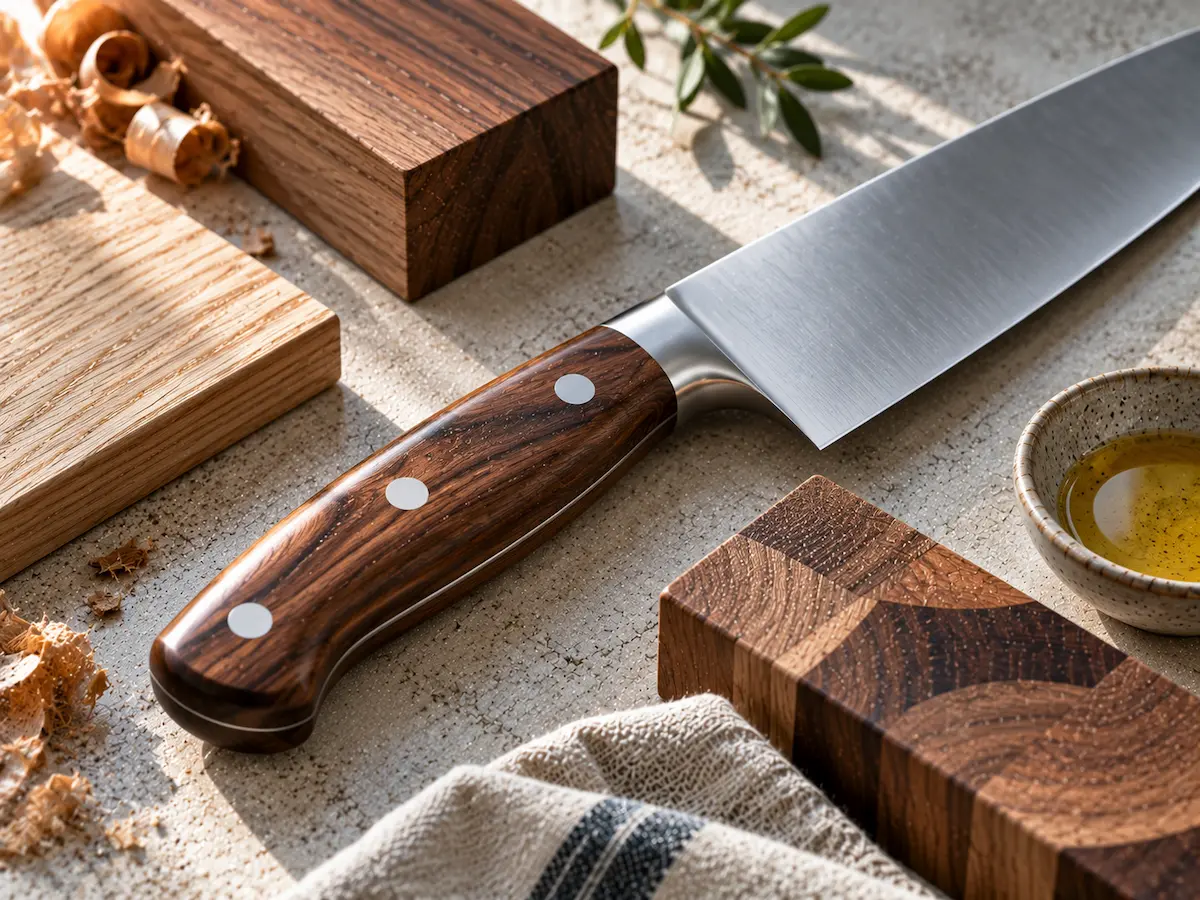
Walnut, oak, ash and maple differ in colour, grain and density. Oiled timber feels warm and natural, and can be refreshed whenever it dries. A thick lacquer lasts longer without attention but cannot be renewed in the same way and can feel less tactile.
What matters most is the fit. Where timber meets steel there should be no step or gap, and the pins should sit flush with the surface.
Boards
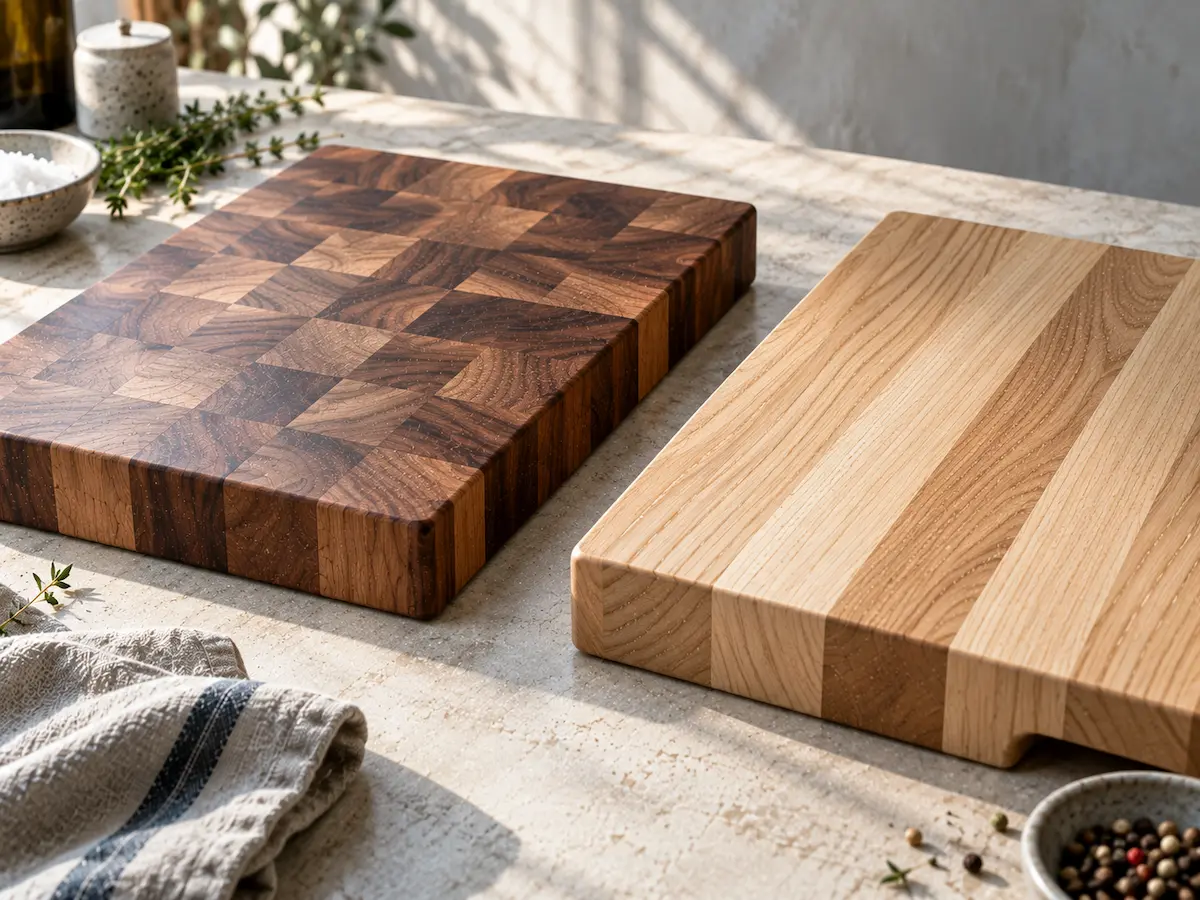
In a board, the choice of timber, the construction and the glue all matter. The timber should be properly dried and flat. Glue lines should be tight and continuous. A food-safe oil finish protects the timber and can be topped up. See our guide to end-grain and edge-grain boards for more.
Small details add up
Eased edges, a softened spine, a smooth choil and well-finished pins do not change what a tool can do, but they change how it feels in the hand. Those are the things you notice every day, and the reason to choose a tool made with attention to them.