Kitchen knives are shaped for particular jobs. Understanding a few terms makes it much easier to choose the knife you need and to see why you might not need as many as a knife block suggests.
A few terms
The edge is the cutting side of the blade. The spine is the unsharpened top. The heel is the rear part of the edge, nearest the handle, and the tip is the front. The belly is the curve of the edge between heel and tip. The grind is how the blade tapers from spine to edge.
Chef’s knife
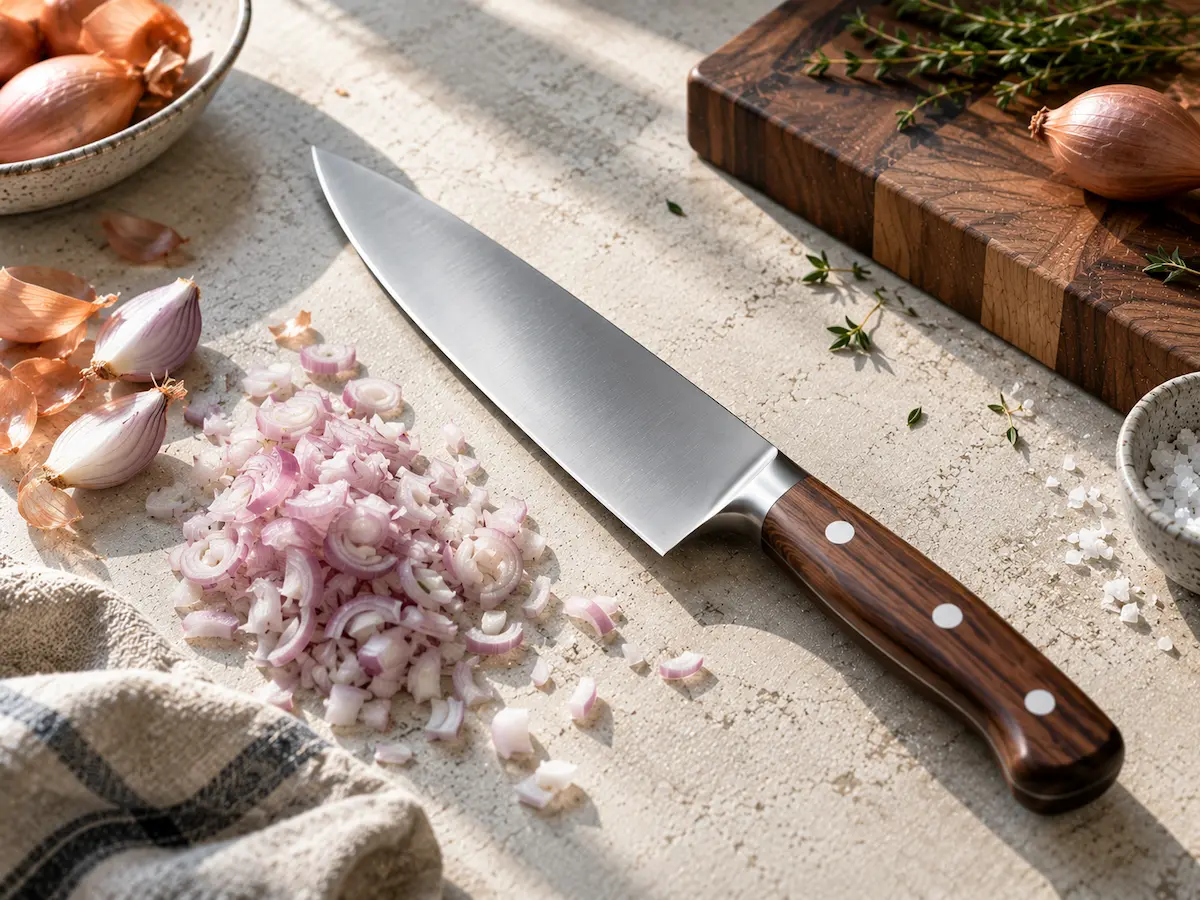
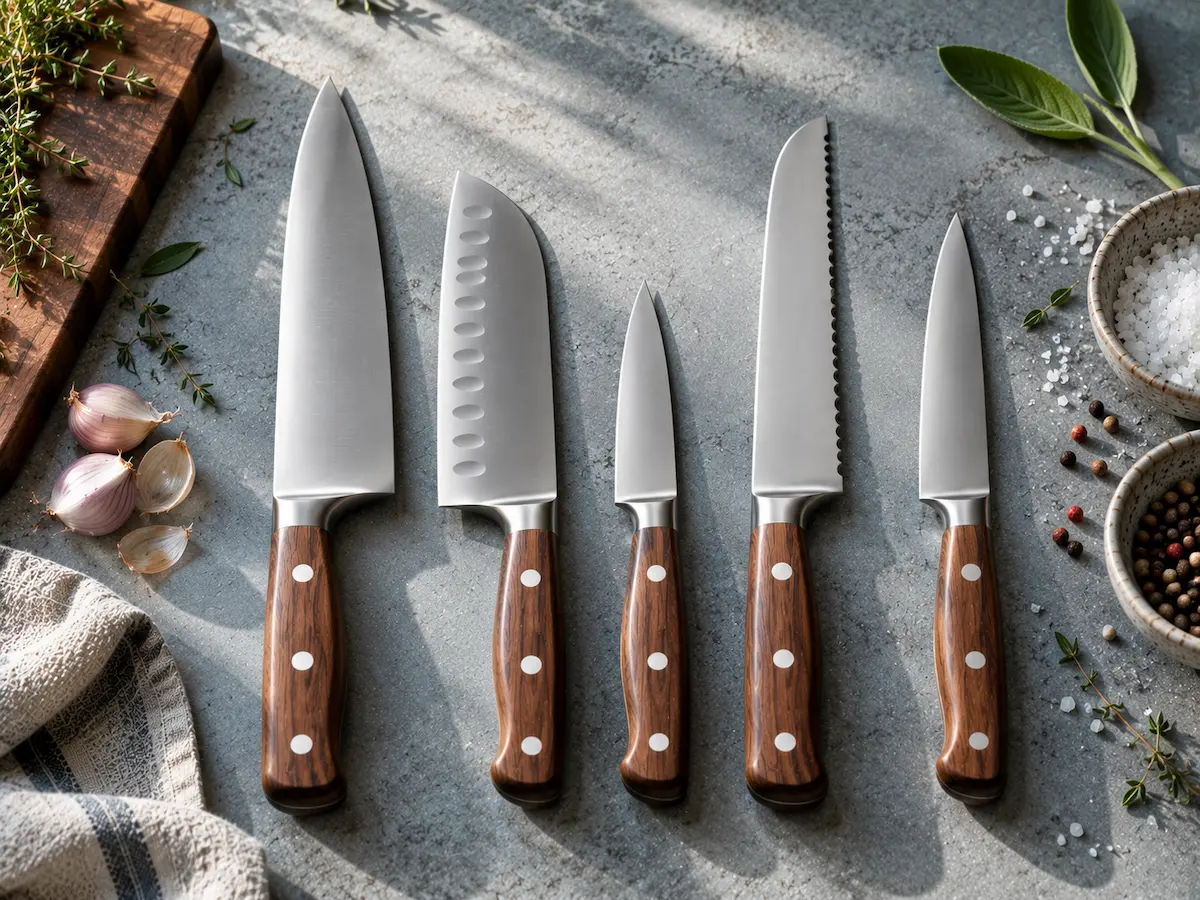
The all-rounder. A western chef’s knife has a pronounced belly, a pointed tip and a wide blade, usually between 180 and 270 mm. The curve allows a rocking cut with the tip on the board. The width protects the knuckles and lets you scoop up what you have cut. It handles vegetables, herbs, meat and fish.
Santoku
A santoku has a flatter edge and a lowered, rounded tip, called a sheep’s foot. It is usually a little shorter than a chef’s knife, at around 165–180 mm. The flat edge favours an up-and-down chopping action and a push cut, with the whole edge meeting the board. It is excellent for vegetables and boneless fish and meat. Some cooks find it more intuitive than a chef’s knife; others miss the rocking motion.
Paring knife
A short knife, typically 60–100 mm, for work done in the hand or on the board: peeling, trimming, hulling and segmenting. The straight spear-point style is the most versatile. A bird’s beak has a curved blade that peels round produce in one smooth turn and is a specialist tool for detailed work.
Bread knife
A serrated edge saws through a hard crust without compressing the soft crumb. Pointed teeth bite into the crust and wider scallops give a smoother cut on soft bread. Long blades of 230 mm or more are best, as they let you slice a full loaf in a single motion. A bread knife is also good for tomatoes, cakes and citrus.
Utility knife
Between paring and chef’s size, usually 120–160 mm. A utility or petty knife is the tool for sandwiches, shallots, small fruit and delicate slicing. A thin blade offers precision in places where a chef’s knife is too big.
How many knives do you need
Many cooks work happily with three: a chef’s knife or santoku, a paring knife and a bread knife. Add a utility knife if you find yourself reaching for something between the first two. Beyond that, extra knives are a pleasure but not a necessity.
- Start with a chef’s knife or santoku in a length that suits your board.
- Add a paring knife for small jobs.
- Add a bread knife if you buy or bake bread.
- Consider a utility knife if you cook with fine slicing in mind.